
A car that’s stopped running doesn’t cause much of a stir on most Alberta properties. In Banff, it can turn into an actual problem fast. The town doesn’t publish a simple headline number the way some municipalities do, so most residents don’t know whether the vehicle sitting in their driveway already puts them offside, or how close a second one would push them there. That uncertainty carries more weight here than it would elsewhere: Banff’s land is leased rather than owned, housing is tight, and a violation doesn’t just draw a warning. It can turn into a written compliance order with real consequences if it’s ignored. This piece lays out exactly where the Community Standards Bylaw draws the line, what counts as a violation, and what to do with a vehicle before it becomes one.
Is There a Legal Limit on Vehicle Storage in Banff?
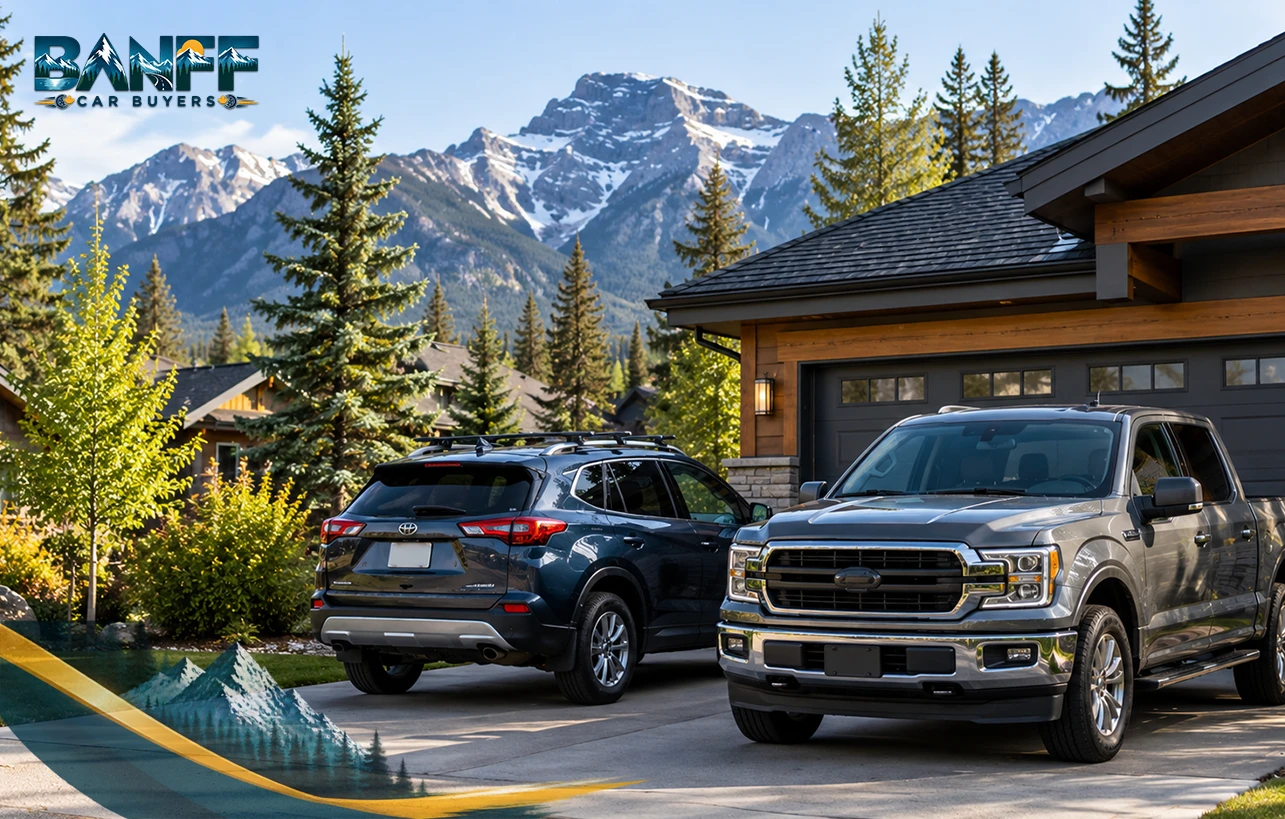
Yes, there’s a limit within the Town of Banff. The Community Standards Bylaw prohibits more than two unregistered vehicles from being visible to a neighbor, a street, or a public space on any one property, and it separately prohibits a dilapidated or derelict vehicle from being visible at all, regardless of how many vehicles are on the lot.
The two prohibitions work differently. A property can have several registered, currently plated vehicles parked in view without any issue, since the two-vehicle cap only counts ones that are unregistered. A single vehicle that’s rusted out, wrecked, or missing major parts can violate the bylaw on its own, though, whether or not its plates are current, simply because it’s visibly dilapidated or derelict. That second rule is the one that catches people off guard. It doesn’t take an accumulation of vehicles to trigger a complaint, just one that looks the part.
Why Are Banff's Property Rules So Different From the Rest of Alberta?
Most Alberta municipalities set property rules through their own land use bylaw, written for land the municipality and its residents hold outright. Banff can’t do that the same way. The town’s entire land base is leased rather than owned, and a separate federal rule decides who’s even allowed to live there in the first place. Both facts shape what “your property” means once you’re inside the park boundary, and they’re worth understanding before either bylaw makes much sense.
There's No Freehold Land in the Banff Townsite
Banff is the only fully incorporated town in Canada that sits entirely inside a national park, and that status comes with a catch: nobody holds title to the land underneath it. The federal National Parks of Canada Lease and Licence of Occupation Regulations authorize the Minister to grant leases for residential and commercial use inside the townsite, and the Town of Banff itself leases its entire municipal footprint from the Government of Canada. A resident storing a vehicle on their property is storing it on land held under a federal lease, not on a title the way a homeowner in Red Deer or Airdrie would hold one. It rarely changes day-to-day life, but it’s a large part of why Banff regulates what happens on a residential lot through its own municipal bylaws rather than through a provincial land framework built for freehold ownership.
What Does Banff's Community Standards Bylaw Say About Vehicle Storage?
Banff doesn’t handle vehicle storage through a single, clearly labeled clause. It sits inside the Community Standards Bylaw’s broader nuisance and property-maintenance provisions, and a few specific parts of that bylaw are the ones that actually apply to a vehicle sitting on a residential lot.
- Unregistered vehicle cap. A property can’t have more than two unregistered vehicles visible from a neighboring property, a street, or a public space at the same time. A third one showing in plain sight is enough to put the property in violation.
- Dilapidated or derelict vehicles. A single vehicle that’s dilapidated or derelict is prohibited if it’s visible, independent of the two-vehicle cap and regardless of its registration status.
- Fluid storage. The bylaw restricts leaving automotive fluids such as engine oil or brake fluid openly exposed on a property, which becomes relevant fast once an aging vehicle starts to leak.
- Tidy materials exception. A small amount of neatly stacked materials stored for legitimate property maintenance isn’t treated as an offence on its own, but that exception is written for materials, not for vehicles.
- Compliance order. An officer who identifies a violation can issue a written compliance order requiring the owner to fix it within a set period, with further enforcement available if nothing changes.
Read together, these provisions make vehicle storage rules in Banff more specific than most Alberta municipalities manage in a single bylaw: a hard number for unregistered vehicles, plus a condition-based standard that applies no matter how many vehicles share the lot.
- Read Also:
How Does Improvement District No. 9 Handle Vehicle Storage?
Cross the townsite boundary and the framework changes completely. Improvement District No. 9 covers the part of Banff National Park outside the Town of Banff’s corporate limits, including the community of Lake Louise, and it’s administered by the Government of Alberta rather than run through a fully independent municipal government. ID9 does have its own elected council, which sets it apart from some improvement districts where the province manages everything directly.
A resident or business in Lake Louise, or anywhere else in ID9, dealing with a vehicle storage concern is better off contacting the district’s administration directly than assuming a townsite rule carries over. Improvement districts in Alberta generally don’t put land use bylaws to a resident vote the way a town does, so decisions in ID9 tend to get made case by case through the council and the province rather than through a document a resident can simply look up.
Which Vehicle Storage Rules Apply: Banff or Improvement District No. 9?
Laid out side by side, the differences are easier to track than they sound.
| Category | Town of Banff (townsite) | Improvement District No. 9 (outside townsite) |
|---|---|---|
| Land ownership | Leased from the Government of Canada; no freehold land | Federal Crown land within the national park |
| Governing body | Town of Banff Council | Alberta Municipal Affairs and the ID9 Council |
| Vehicle storage rule | Community Standards Bylaw: max. two unregistered vehicles visible, plus a ban on any visible dilapidated or derelict vehicle | No vehicle-specific provision identified in public materials; handled case by case |
| Who to contact | Town of Banff Municipal Enforcement | Improvement District No. 9 administration |
| Area covered | Downtown Banff and residential neighborhoods within town limits | Lake Louise and the rest of the park outside town limits |
What Happens If Your Vehicle Violates Banff's Bylaw?
Inside the townsite, a violation can come to Banff’s Municipal Enforcement team’s attention either through a complaint from a neighbor or through a proactive check, since the department handles both reactive and proactive enforcement. Once an officer confirms a violation, the bylaw provides for a written compliance order, which sets out what needs to change and by when, whether that means moving a vehicle, repairing it, or getting it off the property altogether. Ignoring a compliance order is usually what escalates a situation into further enforcement steps, not the vehicle sitting there in the first place.
What's the Easiest Way to Deal With an Unwanted Vehicle in Banff?
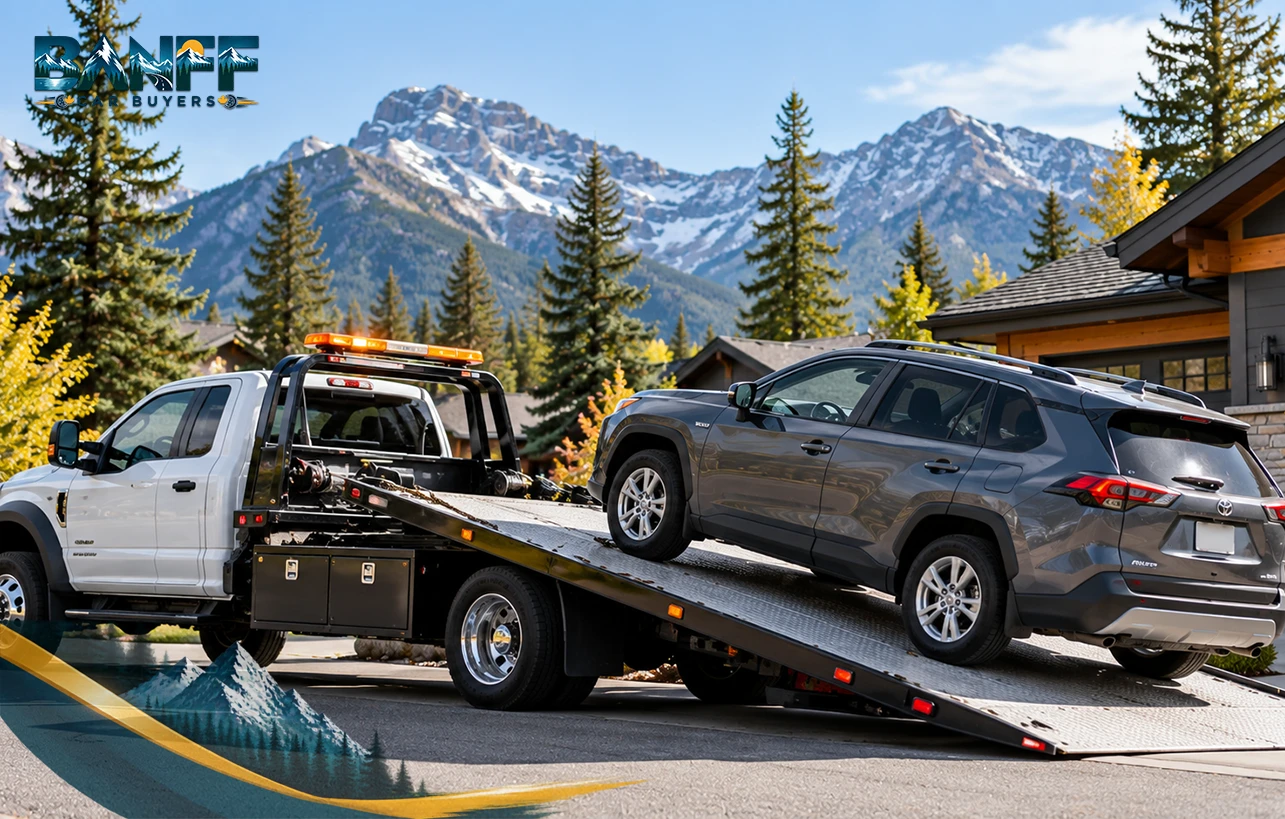
For a lot of residents, the real fix is getting rid of it before storage turns into a bylaw conversation at all. Given how little spare space most Banff properties have, and how far the nearest scrap yard or dismantler sits from the valley, arranging pickup ahead of a complaint usually costs less time than managing the risk for months on end. That’s especially worth doing once a vehicle starts leaking or turns visibly dilapidated, since a single vehicle in that condition is enough on its own to violate the bylaw, no matter how many others share the lot. Selling before it becomes a problem, rather than scrambling after a compliance order arrives, keeps the whole thing simple.
Get an Offer Before Vehicle Storage Becomes a Bylaw Issue
If a vehicle on your Banff property is starting to feel like more of a liability than an asset, Banff Car Buyers can arrange pickup based on its actual condition and location, without asking you to sort out a storage problem first. Call (587) 905-0607 or email hello@banffcarbuyers.ca with the year, make, model, and where the vehicle is sitting, and you’ll get a straightforward answer on what happens next.
The Final Word
Vehicle storage rules in Banff carry a real number attached to them, which trips up a lot of residents who assume it works like other Alberta towns: more than two unregistered vehicles visible on a property is a violation on its own, and a single dilapidated or derelict vehicle can be one too, regardless of how many others are around it. Outside the townsite, in Improvement District No. 9, no equivalent published rule turned up, and the right first call is the district itself rather than a guess based on Banff’s bylaw. Either way, a vehicle that’s already starting to look the part is almost always easier to move along than to manage indefinitely.
Key Questions Answered
How many cars can I legally keep on my property in Banff?
The Community Standards Bylaw caps unregistered vehicles at two if they're visible from a neighboring property, a street, or a public space. A dilapidated or derelict vehicle is prohibited on its own, regardless of registration status or how many other vehicles share the lot.
Does the vehicle storage rule apply outside the Town of Banff?
Not the same way. No vehicle-specific storage provision was identified in the publicly available materials for Improvement District No. 9, which covers the park outside the townsite including Lake Louise. Anyone with a storage concern there should contact the district's administration directly.
Can the Town of Banff make me remove a vehicle from my property?
Yes, if municipal enforcement determines it violates the Community Standards Bylaw's vehicle provisions. The usual process is a written compliance order giving the owner a set period to fix the issue, whether that means repairing, moving, or removing the vehicle, before further enforcement follows.
Why are Banff's property rules different from other Alberta towns?
Banff's land is leased from the Government of Canada rather than owned outright, and a federal need-to-reside rule limits who can live there at all. Both factors help explain why the town regulates activity on a residential lot more tightly than a typical Alberta municipality.
References
- Town of Banff. Community Standards Bylaw 260 (current consolidation). https://banff.ca/DocumentCenter/View/200/Community-Standards-Bylaw-260
- Town of Banff. Municipal Enforcement Overview. https://banff.ca/DocumentCenter/View/16141/09-Municipal-Enforcement
- Government of Canada, Justice Laws Website. National Parks of Canada Lease and Licence of Occupation Regulations. https://laws-lois.justice.gc.ca/eng/regulations/SOR-92-25/
- Parks Canada. Eligible Residency in Banff National Park. https://parks.canada.ca/pn-np/ab/banff/info/serviceimmobilier-realty/resident-residency
- Government of Alberta, Municipal Affairs. Improvement District No. 9 (Banff). https://www.alberta.ca/improvement-district-no-9-banff